 |
AI for book writing
January 03, 2024 | Author: Laura Candler
In the realm of book writing, the advent of Artificial Intelligence has ushered in a revolutionary era, transforming the way stories are crafted and narratives unfold. AI, with its sophisticated algorithms and natural language processing capabilities, has become an indispensable companion to authors, breathing life into their creative visions and pushing the boundaries of literary expression. Through AI-powered tools, writers can now harness the immense power of data analysis, sentiment recognition, and predictive text generation, enabling them to streamline their writing process, conquer writer's block, and even experiment with innovative storytelling techniques. However, amid this remarkable progress, questions of ethics and the preservation of human creativity arise, as the delicate dance between man and machine challenges the very essence of what it means to be a writer in this brave new world.
See also: Top 10 Ebook Creation software
See also: Top 10 Ebook Creation software
2024. BookBud.ai - online book store for AI-generated Books

BookBud.ai is the Internet's pioneering hybrid of an online bookstore and library, exclusively dedicated to books authored by artificial intelligence. The platform is on a mission to transform the way readers engage with literature, challenging traditional norms of online publishing. In contrast to Amazon's role as a book retailer, BookBud.ai serves as an all-encompassing hub where authors can effortlessly create, format, publish, sell, and promote their works, spanning various formats such as print, ebooks, and audio. The platform emphasizes accessibility, allowing authors to achieve these tasks without requiring technical expertise, at a minimal cost, and in a matter of hours. Positioned at the forefront of the evolving publishing landscape, BookBud.ai is committed to the responsible utilization of advanced AI technology. The website boasts a diverse collection of non-fiction books, catering to a broad range of interests.
2023. Amazon limits self-published ebooks to only 3 a day because of AI
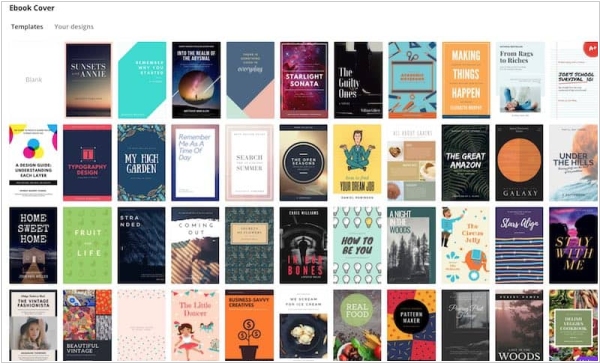
In response to the overwhelming influx of AI-generated ebooks, Amazon has taken action by implementing a new restriction. They now allow self-published ebooks to be uploaded at a maximum rate of three per day. The reason behind this change is the recent surge in notable incidents involving AI-authored books adversely affecting Amazon's platform. Just this past June, the bestseller lists on Amazon were inundated with ebooks authored by AI writing tools like ChatGPT, resulting in a significant outcry from customers due to the nonsensical content of these books. Moreover, as the year began, AI-generated books surpassed those created by human authors in terms of quantity. Among the ebooks available on Amazon, some purported to be guides for foraging wild mushrooms. However, upon scrutiny by mycology enthusiasts, it became evident that these guides, likely generated by AI, contained serious misidentifications of fungi, potentially posing lethal risks. When numerous news outlets sought comments from Amazon regarding this matter, the company responded by promptly removing the problematic books from their platform.
2023. Project Gutenberg is offering audiobooks powered by AI
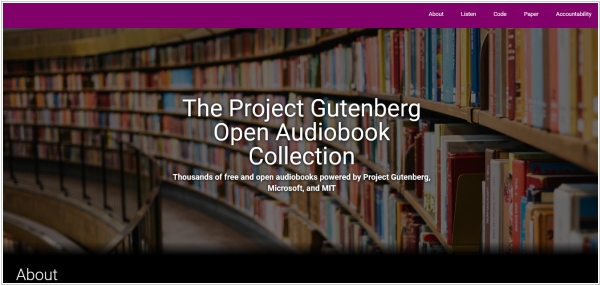
Project Gutenberg has made available thousands of free audiobooks on major platforms such as Spotify, Apple, and Google podcasts. In a collaborative effort with the Massachusetts Institute of Technology and Microsoft, Project Gutenberg has embarked on an extensive initiative to enhance access to classic literature by harnessing the power of AI to produce an extensive audiobook collection. This project capitalizes on the latest developments in neural text-to-speech technology to breathe new life into numerous beloved books, presenting them in a more accessible audio format. Notably, it possesses the capability to replicate a user's voice with only a 5-second audio sample. This endeavor relies on recent breakthroughs in neural text-to-speech to generate realistic voices that closely resemble those of native human speakers. The methodology employs a deep neural network that has been trained to emulate the quality and tone of native speakers, allowing it to communicate in various languages and even detect and adapt to the emotional nuances of the text being read. Presently, there are approximately 5,000 titles available, with ongoing efforts to convert more books into this format.
2023. Amazon released AI guidelines for Kindle Direct Publishing

In response to a surge in AI-generated books saturating the Amazon book market and infiltrating the Kindle Bestseller's list, Amazon KDP has recently implemented new guidelines. These guidelines mandate that authors disclose whether their books contain AI-generated content, encompassing images, text, or translations. This disclosure is now required when publishing a new book or editing and republishing an existing one through KDP, even if the edits involve AI assistance. Authors utilizing AI-based tools for content improvement but not content creation are exempt from reporting, but all authors must adhere to content guidelines, whether their content is AI-generated or AI-assisted. This move aims to enhance transparency and maintain the overall quality of books available to readers.
2023. Lex - AI-powered writing tool

Integration of AI into writing tools represents the ongoing evolution of writing practices over centuries. In this context, Lex faces a dual challenge: it needs to establish a strong presence in a market already populated by established and cost-effective tools, while also encouraging writers to embrace a technology that some fear might replace their jobs. The primary objective is to design an exceptionally user-friendly writing interface equipped with a range of features that cater to power users—those who engage in frequent writing tasks. The role of AI is to enhance and streamline the user's writing process. Interestingly, within Lex's platform, users can engage with the AI through comments, allowing them to seek assistance. For instance, users can request the AI to condense text or, as illustrated in a shared example, determine the necessity of a specific sentence. Additionally, Lex has the capability to generate document headlines, a functionality observed in other AI-infused digital tools.
2023. AuthorVoices.ai wants to disrupt audiobook production industry

AuthorVoices.ai has introduced a revolutionary platform that marks the dawn of a fresh era in audiobook creation. It provides authors the ability to transform their narratives into vibrant auditory experiences, all within a fraction of the time and expense typically linked to conventional narration methods. The platform offers an adaptable and economical remedy, eradicating the necessity for restrictive contracts and recurring invoices. Authors can conveniently procure credits beforehand, granting them the autonomy to dictate the tempo and financial plan of their audiobook ventures. The platform's sophisticated AI software adeptly manages all the intricate specifications demanded by prominent audiobook vendors. This ensures the smooth and top-notch production of audiobooks, aligning with industry benchmarks while preserving swiftness. AuthorVoices.ai empowers storytellers to either personally narrate their works or select from a diverse array of professionally replicated voices. By simplifying the process of audiobook creation through the integration of AI technology, this platform emerges as a transformative force for authors and the entire publishing domain.
2023. Pooks.ai creates personalized learning books

Pooks.ai is an innovative platform designed to enhance the reading and learning journey for individuals. The platform aims to completely transform the way readers engage with literature and assimilate information. By combining personalized elements, Pooks.ai provides a diverse collection of e-books and audiobooks. This customization extends to both the content and individual preferences. Content-based personalization enables readers to tailor their experience by selecting specific topics, while preference-based personalization caters to unique reader requirements. The platform gathers details such as learning style, preferred subjects, and even the reader's favorite historical period to curate an exceptional book encounter. E-books on Pooks.ai are available in PDF, EPUB, and .mobi formats, while audiobooks are provided in m4b audiobook files as well as .mp3 files, ensuring a comprehensive range of choices.
2023. Amazon refused to remove AI-written book

Author and journalist Jane Fredman in her Twitter account wrote that Amazon declined to remove books that were ostensibly attributed to her but not authored by her (even though they carried her name). This refusal reportedly stemmed from her lack of trademark ownership for her own name. The credited author of these books is Jade Fredman, distinct from Jane Fredman, although their works were categorized under the "similar related results" section of Fredman's authentic book, "The Business of Being a Writer." Fredman also pointed out on her Twitter that these books appeared to be created by an AI-driven process employed by an unidentified individual she referred to as "some huckster." In her attempt to address the issue with Amazon, Fredman was informed that the books could not be taken down based on the provided information. Her Twitter post conveyed, "Given that I lack copyright claims to these AI-generated pieces and haven't trademarked my name, I'm uncertain about the available recourse."
2023. Authors sign open letter to AI CEOs

An open letter has been shared by the Authors Guild, directed towards prominent figures in the field of AI technology including Sam Altman (CEO of OpenAI), Sundar Pichai (CEO of Alphabet), Mark Zuckerberg (CEO of Meta), Emad Mostaque (CEO of Stability AI), and Arvind Krishna (CEO of IBM). The intention of this letter is to appeal to these CEOs, urging them to seek consent, acknowledge the creators, and provide appropriate compensation for the copyrighted materials utilized in training their AI systems. The letter emphasizes three crucial steps for the CEOs and their companies to address the negative impact: 1. Seek permission before using copyrighted material in generative AI programs. 2. Fairly compensate writers for both past and ongoing usage of their works in generative AI programs. 3. Fairly compensate writers for the utilization of their works in AI-generated outputs, regardless of whether these outputs violate current copyright laws.
2023. Amazon is attacked by AI-generated books

Amazon's Kindle Unlimited platform recently encountered a troubling issue involving an influx of AI-generated books that contained nonsensical content. The Top 100 chart for Best Sellers in Teen & Young Adult Contemporary Romance eBooks was flooded with AI-generated books designed to manipulate rankings and generate more clicks. Vice reported that out of the top 100 books on the chart, only 19 appeared to be legitimate. Although Amazon appeared to have taken action against these books, this incident emphasizes the problem of individuals spamming the platform with AI-generated material to profit from it. On Monday, Caitlyn Lynch's tweet referred to the situation as AI bots disrupting Amazon. She also shared a screenshot of the Teen & Young Adult Contemporary Romance category's Best Sellers list, which clearly showed that the majority of books were AI-generated and created solely for the purpose of click farming.